
Beyond Practice: Part One: Zahia Chabaan
 Worth Pondering
Real conversations about professional development, from the people who live it.
“I’m learning because I’m emotionally invested in my learning plan”
Part One: 20 years, 3 endorsements, and what CPD actually becomes
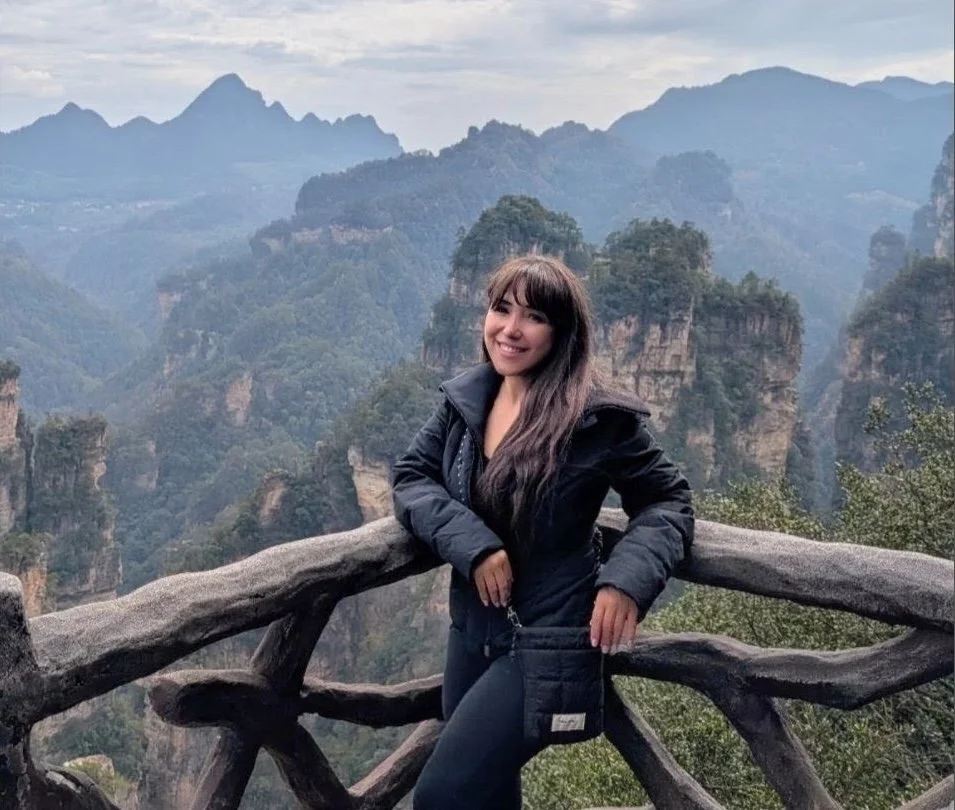 Clinical, Educational & Developmental, and Forensic Psychologist
Zahia Chaaban holds three endorsements: clinical, educational and developmental, and forensic. She earned forensic endorsement through substantially equivalent study, years of supervised practice, as well as professional development in the field of forensic psychology. She has been fully registered for just over twenty years, works in the criminal justice system alongside private practice, and supervises a team of psychologists across several states.
We had a conversation about professional development. What came back was less a set of tips than a lesson: that CPD stops being a burden at the point it stops being theoretical, and that the shift has almost nothing to do with hours and everything to do with what you are carrying.
The incidental choice
Zahia started out studying law. Her high school let students take university subjects in years 11 and 12, so she did a few, and decided it was not for her.
What redirected her was a corridor conversation. Choosing subjects for university, she ran into someone who had graduated the year before and asked what she was studying. Psychology, the woman said. Zahia asked what that was about. “She said, it’s helping people. So I was like, okay, that sounds cool. And put that on my form. And that is how I got into studying psychology.” The interest in the criminal justice system was there from the start, which was why law had appealed, but forensic training at the time was adult-focused, so she went into educational and developmental psychology instead. She worked in schools, and as an organisational psychologist. Then one of the young people she was working with was arrested and sent to a detention centre. She visited him there, left wondering what it would be like to work in that environment, and applied. The job meant compromising: government pay, no work phone or car, and a three-month temporary contract. Twenty years later she is still there.
“I’ve always done things on the side, because I get bored just doing one thing and always feel like I need a bit more of a challenge.”
That restlessness has run alongside the job the whole time. Private practice, on and off. Assessment work for children with disabilities and long-term illness. Standardisation projects with Pearson, which she still does. Then a clinical masters. She had been working clinically for years by that point, doing her own research late at night on what to do with presentations like delirium and psychosis, and she wanted to know formally whether what she had taught herself was right.
“I wanted to formally learn: was I doing the right things clinically? You kind of learn over time, but it’s like, is there more that I should be doing that I’m not aware I should be doing?”
That instinct, to go back and check rather than assume, turns out to be the thread running through everything else she said.
Learning for someone, not for yourself
Asked what CPD means to her now compared to when she was first registered, Zahia described early CPD as floating free of anything real.
You learn as much as you can in those first years, but most of it is theoretical. You might be working in schools on educational matters while attending training on CBT or personality disorders you are not encountering. You take it in, but it has no meaning for you.
The change comes when the learning attaches to a person. Once you are working with clients, you go looking for CPD that relates to them, because you are trying to work out what to do. Whether this is delirium. Whether that is bipolar. At that point, she said, you are not just consuming the material. You understand it, because it matters.
“I really need to get this right, because it’s somebody’s life. I am currently working with them on improving their quality of life, and it’s in my hands.”
Asked whether the way she sets learning goals had changed as she gained experience, she started by agreeing. Learning goals, she said, are always ever-changing from the start to the end.
Even now she will decide to work on one thing and find herself at 3am reading about something else entirely, because a report, a complex assessment, or a client who has not improved with treatment is sitting on her mind. Hours and hours of her own reading, not waiting for a webinar to cover it.
“You’re not waiting for PD, which early in your career you do. You wait for the experts to tell you this is the training you should be doing. As you get older and more experienced, you’re spending hours looking for your own, reading all the literature.”
Then she drew a finer distinction than the question had asked for.
“So it’s not that your learning goals change. It’s that your learning goals become more meaningful. You still have the same thirst for knowledge, but it’s not, ‘I’m learning because I feel like an imposter’.”
She contrasted it with university, where literature reviews and meta-analyses were required work. Once the essay was submitted, the detail did not stay with her. Working with clients, you spend hours reviewing that same literature, and it stays, because now you have a stake in the outcome.
“I’m learning because I’m emotionally invested in my learning plan.”
Self-doubt itself never went away, and she does not think it should. People assume that after twenty years you know everything, she said. She questions herself constantly. She seeks external supervision from people who know more than she does, and sometimes on things she is already confident about, just to be sure she is not missing something.
She tells families when she has done it, too. That she went and got a second opinion from someone expert in a particular test, to be certain she was not giving them the wrong advice about their child. The response, she said, is almost always relief. Parents take her word for it precisely because she went looking for a check on it.
Finding the common ground
With three endorsed areas, we wondered if she had three learning plans. This is not the case.
A lot of the neurodevelopmental work overlaps with the clinical, she said. The interventions are largely the same, CBT, DBT, schema work, whether you are a clinical psychologist or an ed and dev psychologist. Some assessments differ. Forensic is the outlier.
In practice, the split falls along the line between what work provides and what she chooses. Her agency organises a conference each year to meet its active training requirements, and requires two hours of supervision a month, so the forensic learning is largely covered. She also has to stay current on it because she supervises psychologists working in that setting. Her own time and her own interest run towards the neurodevelopmental and clinical material.
Come with a plan
We asked what separates peer consultation that genuinely develops your practice from sessions that tick the box. Her answer came in two halves, and the second one is the uncomfortable one.
The first half is about the supervisor, and about you. It comes down to the supervisor, she said, and to how much you value what you are getting from them.
Not all of her supervision has been equally useful. There were periods with no choice of supervisor, and at times she was assigned someone who was not a good fit for her practice or her supervisory style. Supervision did not always feel practical or useful.
Her fix was to stop waiting to be matched and start choosing. She has always kept external supervisors alongside internal ones, and seeks people out for specific problems. A case presenting as dyscalculia that looked like something else. A session with an accredited ADOS and ADI R trainer to go through the research behind the tests.
The second half puts the responsibility back on the supervisee. People hinder themselves, she said, by not telling their supervisor what they need from the sessions. Supervisors are human. They will not know everything, and they will not excel at every method of supervision either.
“I have to remind my psychologists, if you need reflective practice, you need to explicitly tell me. Because I might think I’m being reflective, and then I go back to directive without even realising I’m doing it.”
She has built a habit around it, naming the agenda at the top of the session, which prompts her to switch models.
That preparation is the whole difference in how she runs group supervision. There is a lot of work that goes in beforehand, and none of it is her turning up to see who has something to talk about.
She surveys her psychologists on topics and puts them to a vote rather than choosing herself. She brings in others to present when they know more than she does, including a colleague with an extra year of study in psychedelic therapy and someone experienced with gender dysphoria. She prepares slides in advance so people are not writing furiously instead of listening, and asks ahead of time whether anyone is bringing a case so she can allocate the time.
Even on topics she has covered a hundred times, she goes back to the literature first. Running a session on dyslexia, she will check what has changed in the field, and, with 52% of her clients Aboriginal, what she needs to do differently for the assessment to be culturally informed. It is not a matter of already knowing it and turning up.
There is one more piece worth naming, and it is rarely done. When she runs something advanced, she front-loads her early career psychologists individually so they are not lost. Before a group session on the neurobiology of ADHD, she will have already gone through the theories, models, assessment and treatment with them one on one.
“That way they don’t feel like this is going way above my head. It’s at a level that is advanced enough to meet the needs of the seniors, but it’s not the provisionals coming in and feeling like, oh my God, I don’t belong here.”
Asked how the psychologists she supervises experience peer consultation, her read was warmer than the stereotype suggests. She rarely comes across one who does not see the value in it. Most, she said, are eager to learn and eager to get it right for their clients. What varies is the stage someone is at, and whether they have said out loud what they need.
Her monthly group supervision is not mandatory. Nobody has to come. Everyone does, and the psychologists working in rural and remote areas are the keenest, because they want to know what everyone else is doing.
Don’t just ask the psychologists
The most practical thing in this interview is a story about a coffee break.
Zahia was at FASD training with colleagues, presented by a developmental paediatrician. At the time, her team cannot assess sentinel features in custody, because there is no doctor available to do it. She had raised something in the session, and during the break the two of them kept talking. She explained the problem, and said she felt it was well outside her competency to take on herself.
“And the paediatrician said, well, why can’t you do it? And she was like, come to me and I’ll teach you.”
Zahia took her up on it, and spent several days shadowing the paediatrician and her team through their assessments.
What she took from it was not only technical. She described watching someone obviously extremely intelligent be consistently warm and approachable with clients, whether the child was three or sixteen, and realising how much there was to learn from her beyond the knowledge itself.
The clinical content was considerable too. They discussed genetic testing, and the overlap between genetic and neurodevelopmental presentations, with the paediatrician explaining as she went why she was noting particular physical features and what those features might indicate.
That opened something up. Reading afterwards, Zahia went further into the organic conditions that can sit underneath a presentation, and how much they change what you are looking at. Without knowing Dandy-Walker syndrome, you would not understand its effect on processing speed. Without knowing Bardet-Biedl syndrome, you would not understand how cognitive functioning changes over time. Fragile X. Angelman syndrome. Cushing’s disease, which can present looking like autism.
None of that was specifically psychology, but all of it belongs in a biopsychosocial assessment.
“It makes you a better psychologist to be open to the perspectives of other practitioners, because then it helps you with your differentials, more importantly.”
This is not a one-off for her. While AHPRA requires peer consultation to be with psychologists, and she does that, she has also had supervision with a linguist for years, out of her own interest in language and how its impact extends beyond psychology.
Her broader point is that most people say yes. People do want to give you their knowledge and their expertise, she said, because they want the best for their clients.
She has used the same approach on institutions. Years ago she contacted a speech pathologist at a test publisher, who offered to train her on a language assessment but could not extend it to her colleagues, whose work was forensic rather than ed and dev. Zahia made the case anyway. She could not justify asking her workplace to pay thousands for the tests without the training, and courts were not recognising language disorders in the young people she assessed. The publisher agreed she had a point, and came out to train the whole team.
The context matters here. Her organisation did not employ speech pathologists at the time, and none could be accessed. She has since obtained funding to hire them, and they now complete these assessments instead.
“Sometimes it’s about showing that there is a gap, it is directly impacting on the clients, and that working together could actually close this gap.”
Key takeaways for Ponder
Aleks and EllaExpand beyond your workplace or field.
Learn what other professions do, and learn from their expertise. Zahia’s shadowing with a developmental paediatrician, or a speech pathologist changed and strengthened her differentials, and it started with a conversation in a break.
She reminded us why we started this.
Why we do CPD at all, and why we wanted to take the burden of documenting it away. It was so the attention could go where it matters. Zahia’s point was that whether you are at an event, working through an article, or consulting with a peer, the reason you are doing it is that you are invested in your client. We can have an enormous impact on people’s lives and on their trajectory, and what we want at the end of it is to know we did everything we could to get them the right intervention.
That landed differently for each of us. For Aleks, it prompted a reflection on organisational psychology:
I don’t work one on one with clients, but I am responsible for implementing a sound systemic solution, and that solution shapes the two thirds of people’s lives they spend at work. The stakes are not smaller for being less visible.
For Ella, it landed as a check on complacency:
I am very aware that I work with people directly, and that the report I produce or the intervention I provide is going to affect them in some way. But like all work, it has moments where it gets repetitive, or where you get complacent. Zahia's words were a deep reminder of that, and of how my engagement in professional development is what sets it up.
Self-reflection isn’t a step you complete.
Setting your learning goals at the start of the year is not the reflective part. The reflective part is constant: questioning yourself, never assuming you have all the answers, going back to the research when something does not sit right. Zahia has been doing this for twenty years across three endorsements and still seeks a second opinion on cases she feels confident about.
It is also the reason we built Ponder to be quick rather than thorough at the point of entry. New goals as they occur to you, added as you go. Reflections captured wherever you are, when you actually have them, rather than reconstructed weeks later from memory.
In part two: what it costs to keep this up, the 543-hour table that took twenty years to build, and the piece of advice Zahia gives anyone treating CPD as an obligation to get through.
Beyond Practice is a series of conversations with psychologists about professional development.
CPD is one of the few parts of the job that everyone does and almost nobody discusses. How you decide what to learn. How you find a supervisor worth having, and what to do when you have been assigned one who is not. What happens to your learning plan when life gets in the way. How you keep a record of any of it across twenty years of changing systems.
Most psychologists work this out alone, by trial and error, and rarely get to see how anyone else does it. So we are asking. Across career stages, settings and areas of practice. What they have refined over time, what they have abandoned, and what they wish someone had told them earlier.
Not best practice handed down from above. What actually works, from people doing the work.
If you would like to be interviewed, or you know a psychologist whose approach we should hear about, get in touch.
Capture the reflection when you have it, not weeks later from memory.
Ponder logs your CPD against the PsyBA framework, tracks peer consultation and learning goals, and exports an audit-ready logbook.