
Beyond Practice: Fel Donatelli.
 Worth Pondering
Real conversations about professional development, from the people who live it.
“I go in thinking I'm going to learn something from this person”
25 years in organisational psychology, and why learning from peers during PD events can be just as useful as the presenter's content
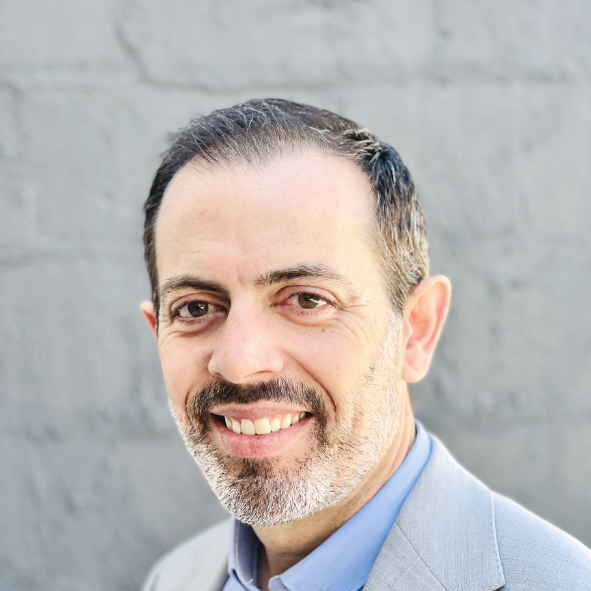 Organisational Psychologist, Perquiro
Fel Donatelli is an organisational psychologist with around twenty-five years in the profession. He started in recruitment, moved into assessment, then spent years in internal organisational development roles, often as the only OD resource in businesses of three to five thousand people. 13 years ago he started Perquiro, his own consultancy, and his work now runs across individual, team and organisational levels. He is probably best known for behavioural competency design. Lately, most of what comes his way is team development.
Perquiro also has a clinical psychology arm, The Skill Collective. This gives him an unusual vantage point on how different branches of the profession approach the same regulatory requirements
We asked him to turn his own lens back on himself. What came back was a picture of CPD that has almost nothing to do with hours, and a very specific answer to the question most psychologists get stuck on: how do you choose?
Key takeaways for Ponder
Aleks and EllaCPD looks different early in your career than it does later, and that is not a failure of planning.
Early on you cast the net wide. You attend as much as you can and absorb as much as you can. Later it narrows, and what drives it is what you are trying to achieve with and for your clients. This is the second interview in a row where that shift has come up unprompted, described the same way from two completely different practices.
The power is in the conversations with the other people in the room.
The presenter provides the foundation, but some of the richest learning often comes from the conversations with other practitioners in the room with their diverse backgrounds. For Aleks, this brought the social learning element of 70-20-10 to life: “I always think about this model in my work, but I hadn't really considered it as part of my own PD.”
There is a way out of choice paralysis.
In our field there are countless models and ways to approach the same intervention, and it is genuinely possible to stay stuck not knowing which activity to do. Fel's answer is to research the models and the facilitators, pick two or three, make sure they fit your context, and treat them as a toolkit you can draw on when you need it. Then trying one with a client becomes the learning goal. You reflect on how it went, and your own style builds from there.
It reframed what counts as development.
The research you do the first time you put together an intervention. Peer supervision, including with people who aren't psychologists. For Ella, that surfaced a blind spot: “Every time I've done research for a client, a specific cognitive profile for an ADHD child, say, I've actually never thought to log that as professional development.” The work was already development. It just never got written down.
This is part of why Ponder is built to be fast at the point of entry rather than thorough. If logging takes two minutes, the reading you did on a Tuesday afternoon for one client actually makes it into the record. If it takes twenty, it doesn't.
The three things people get stuck on
Fel supervises registrars working towards endorsement, so we started with what he sees them struggle with. He named three things, and said it is all of them.
Time. Not abstract busyness, but scheduling. Some organisations only run training on particular evenings, and if your job makes that night impossible, you miss all of it. He noted that organisational psychology PD in particular seems to sit in the evenings rather than during the day.
Knowing whether something will be worth it. For events there is chatter to draw on: are you going, do you know this speaker. Outside events, that signal doesn't exist.
Not knowing what to focus on. This one clusters just after registration or endorsement, when the questions arrive in volume.
“The challenge is: where should I focus? What do I want to be known for? And then how do I achieve that through my PD?”
Without an answer to the middle question, the other two stay unanswerable. Which is worth sitting with: the reason PD feels hard just after endorsement is often not the PD.
Everything below is, in one way or another, his answer to those three.
From casting the net wide to the Venn diagram
Asked what his own development looks like now, Fel drew a line between two eras.
Early on it was a scattergun approach. Broad exposure, a bit of everything, trying to cover the field. Now it is far more deliberate, and the test is whether a piece of PD is in service of the clients he works with and the work he has coming up.
“The development kind of happens within the work now. I'm forever looking at how can I improve on the way we do this, what's a different technique I can use, experimenting in the work. But using the PD as an opportunity to look into that.”
When we asked how he decides and prioritises what to do, the framing was a Venn diagram. Development that serves you, your team and the organisation at the same time.
“It's that bit in the middle that you want to be able to hit in order to convince your boss to fund it. That's going to be your most impactful suggestion.”
If all three align, you have a case for funding. If it only serves you, it is harder to justify and less likely to be applied. For a consultant the middle circle is the client rather than the employer, but the logic holds.
His view is that the compliance framing stops being the point fairly early.
“The more you progress in your career, the less CPD becomes about compliance and the more it becomes about ensuring you're bringing the best possible value to clients.”
“If you're always searching for another way, you'll never find one way”
Aleks put a problem to him that she has run into in her own career. There are countless coaching frameworks, team development models and assessment tools. How do you choose which one to invest your PD in without becoming paralysed by the options?
His answer split by career stage, and he flagged that this would be his answer to most questions.
Early on, breadth is better. Try things. Build a toolkit. Later, as your way of working takes shape, you lean towards specificity and depth, while still scanning back out occasionally so you don't become isolated, just not to the degree you did earlier.
The more useful part was his reframe of the premise.
“There's often no best way. It's just multiple good ways, and then you need to take the context into account. If you have two or three ways of approaching the main types of issues, then I think you're really well set up.”
So the method is: research the models and the people facilitating them. Pick two or three. Check they make sense for the contexts you actually work in. Some won't. Then you have options to draw on, which is the capability, rather than one correct answer, which doesn't exist.
In team development, that is exactly how he works now. Three or four approaches, matched to the client.
And then the line that stopped the conversation for a second.
“If you're always searching for another way, then you'll never find one way. You've got to find something you're comfortable with, because it's all so powerful.”
Fel DonatelliAleks’ addition was that comfort is not only a knowledge problem. You build some of it through PD, but there are other reasons you might not yet feel comfortable running a program a particular way, and naming which one you are dealing with matters.
The part that makes this a CPD plan rather than a shopping list is what comes next. Trying the approach with a client is the learning goal. You apply it, you reflect on how it landed, and your own style and toolkit build from there.
The development that hides inside the work
Accumulating hours has never been Fel's problem.
“I've rarely had to think about accumulating hours, because there's so much learning and PD in the job that there never seems to be an issue. Whenever I sit down and look at it, the hours are done in months, not a year.”
Part of the reason is how much of it is embedded in the work. His formats are unglamorous and mostly social. Peer supervision. A network of other supervisors that meets a few times a year. Supervising others, which is learning in its own right. Research. Courses and accreditations when a specific gap needs filling. This year, that meant a six-week team coaching accreditation with Dr Paul Lawrence from the Team Coaching Collective, as well as a Supervision Masterclass. Conferences and college events.
Two of those deserve calling out, because they are the ones people are least likely to recognise as development at all.
The research behind a first-time intervention. Fel described the research, design and reflection involved in developing a new intervention as one of the most significant sources of learning in his practice. While activities claimed as CPD should always align with current Psychology Board requirements, he noted that some of the most valuable professional development often occurs while solving real client challenges.
Peer learning with people who aren't psychologists. This is the second interview to land on some version of this. In Fel's words:
“Some of my most valuable peer learning conversations occur with professionals outside psychology who bring different perspectives to workplace and organisational issues.”
And then the development that happens inside the work itself.
“As well as deliberately applying and refining new approaches in practice, I'd view that as a significant source of professional development.”
Where org and clinical CPD part ways
Sharing an office with a clinical practice, Fel was careful to frame this as observation and assumption rather than authority. His read is that the main difference is breadth of practice.
An organisational psychologist might be doing leadership assessment, team development, facilitation, change projects and design work. Those require very different skills. He looks at the clinical competency framework and sees something more discrete by comparison: real variation in focus areas, but less scatter.
“In the org world, you could be doing absolutely anything. So one of the key differences is thinking about how do you focus your PD on what's important for you and your practice, and removing all the noise, because you get sent PD opportunities all the time.”
His solution to the noise is to search rather than subscribe. Inbound notifications are too numerous to filter usefully, so he goes looking, guided by the providers whose learning style and approach he has come to trust. He acknowledged the obvious risk in that: a self-driven search carries your own bias with it.
The second difference he named is where the learning comes from. As organisational work has to be contextualised in a workplace, he draws heavily from outside psychology, from business and other disciplines. His assumption is that clinicians have breadth of a different kind, across home life, relationships and personal circumstances, with less need to understand the workplace specifically.
“We're not as different as you'd think”
Asked what had recently changed how he works, Fel talked about two education-based events: the team coaching accreditation, and a supervision masterclass he has to complete every five years to keep supervising.
In the masterclass, he was one of two organisational psychologists in a room of ten to fifteen, and everyone else was effectively a clinician. In the accreditation, the room held a GP, a psychotherapist, two L&D professionals (one a former Olympian) and clinical psychologists.
He left both thinking the same thing.
“We're not as different as, going in, you'd think. We're all trying to achieve the same thing. We're at that PD event for very similar reasons. And there's a huge amount you can learn from those people's different perspectives.”
Then the line that sits at the centre of this piece. The presenter provides the foundation, he said, but a great deal sits in the conversations happening around it: people raising questions, voicing concerns, commenting constructively on what is being discussed.
“With education-based content, I really use the network in the room to try and uncover more about the topic than the presenter would even know.”
The precondition is an open mind. His framing was that if you go in genuinely open to other people's perspectives, on a topic you probably came to because you already had views about it, you can always take something from it.
“Go in with curiosity” is the tip he landed on, and he applies the same discipline to coaching.
“Coaching certainly isn't instruction. I don't go in thinking I'm going to be teaching this person anything. I go in thinking I'm going to learn something from this person. And therefore I'm asking broader, more open questions and being genuinely curious.”
He sets himself an outcome of learning one or two things from every session, which may be about the topic or about himself.
It is the same move Zahia described in part one of this series. Her shadowing with a developmental paediatrician came out of a conversation in a break, because she named a specific clinical problem instead of making small talk, and the paediatrician said: come to me and I'll teach you.
How development actually sticks
The most useful thing Fel said was also the simplest. He described the cycle that makes learning hold: learn something new, apply it to a situation, reflect on it, discuss it, and ideally teach it to someone else.
“You'll lose most of what you read and what you hear unless you engage in the discussions around it.”
Which explains why the network in the room matters as much as he says it does. Peer discussion compresses the whole cycle. When you talk to someone else at an event, you are not only hearing new material. You are hearing how they applied something similar, how they reflected on it, and they are discussing it with you in the moment. Several stages happen at once, for both of you. You are borrowing their reflection, and they are borrowing yours.
It also explains why the cheapest CPD in the guidelines is often the most durable. Peer supervision is the cycle, run deliberately, on a schedule.
And it sets a test you can apply to anything you are about to book. Will this give you something to apply? Will there be anyone there worth talking to about it afterwards? If the answer to both is no, the hours will count and very little else will.
What changes after endorsement
One last observation, because it follows from everything above.
“When you go to events, it tends to be those earlier in their career and those going through their endorsements who are there. The more experienced people don't tend to be at those events.”
His read is that this is selectiveness rather than disengagement. Experienced practitioners move towards experience-based and social learning, and towards smaller, more specific gatherings with a broader mix of professions in them.
There is also a plain financial factor he named. Student discounts disappear. Conference and event fees can triple. That hits hardest at precisely the point where someone has just finished and has the least clarity about what is worth paying for.
Back to the Venn diagram
That financial factor is exactly where Fel's Venn diagram earns its keep. Once you can point to the middle, where a session serves you, your team and your client at once, you are not asking for money. You are making a case for it.
That leaves two questions.
For the psychologist: do you actually look for that overlap before you book something, or does it only surface after the fact? And would you feel comfortable naming it out loud to whoever signs off your PD?
For the people running these events: have you made that overlap obvious, or left a psychologist to find it and argue it themselves?
Beyond Practice is a series of conversations with psychologists about professional development.
CPD is one of the few parts of the job that everyone does and almost nobody discusses. How you decide what to learn. How you find a supervisor worth having, and what to do when you have been assigned one who is not. What happens to your learning plan when life gets in the way. How you keep a record of any of it across twenty years of changing systems.
Most psychologists work this out alone, by trial and error, and rarely get to see how anyone else does it. So we are asking. Across career stages, settings and areas of practice. What they have refined over time, what they have abandoned, and what they wish someone had told them earlier.
Not best practice handed down from above. What actually works, from people doing the work.
If you would like to be interviewed, or you know a psychologist whose approach we should hear about, get in touch.
The work was already development. Make sure it gets written down.
Ponder logs your CPD against the PsyBA framework, tracks peer consultation and learning goals, and exports an audit-ready logbook.